Grammar · N3
Differences between 「なければならない」と「なければいけない」: Repost
By Can (original WordPress byline: dimitri2012) ·
更新: 13th Dec 2022
皆さん、
おはようございます。This is a repost.
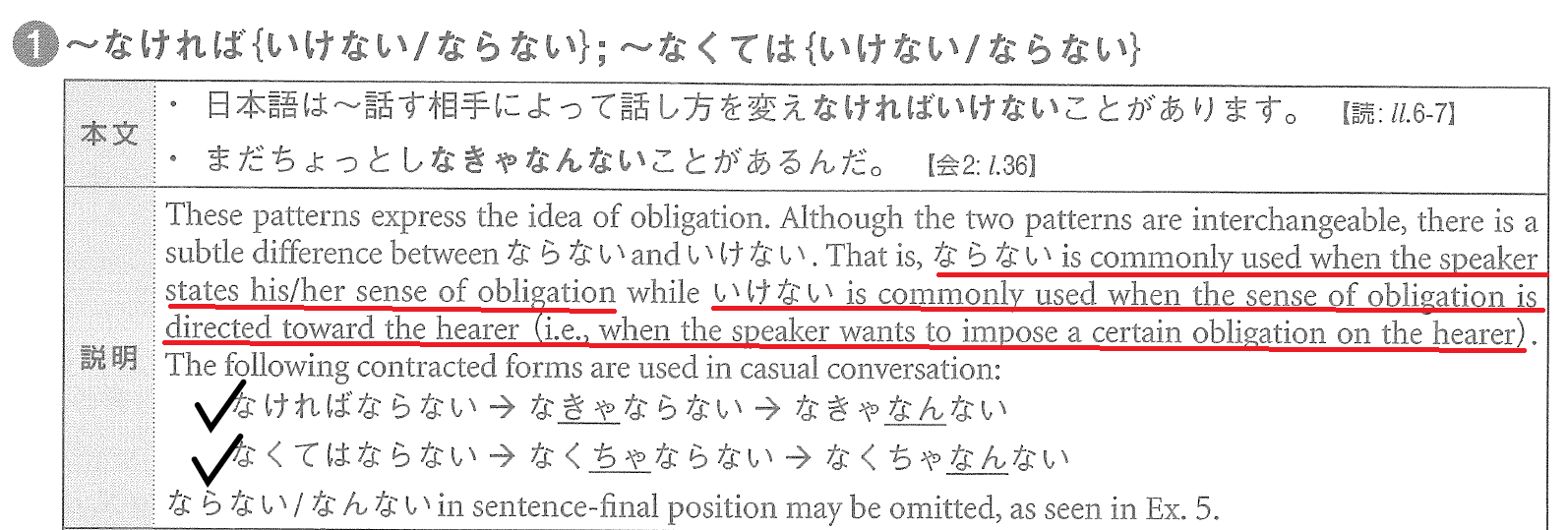
EDIT (13th Dec 2022): Please note that the contents have been adapted from Tobira, Gateway to Advanced Japanese, which are written by native Japanese professors. I have also added content from 初級日本語文法と教え方のポイント。でたらめではありません。 ————————————– 「なければならない」と「なければいけない」の違いを説明したいと思います。
「なければならない」は話し手が自分に義務があるという意思を表します。 goo辞書より: 責任・義務の意を表す | 必要不可欠の意を表す 初級日本語文法と教え方のポイントより: 「なければならない」はやや硬く、改まった印象を与えます。
例: 国民はみんま税金を払わなければなりません。
ーーーーーーーーーーーーーーーーーーーーーーーーーーーーー
一方、「なければいけない」は話し手が聞き手に義務があるのを言いたい時に使う。
goo国語秘書: 「そうする義務や必要があるという気持ちを表す。」
初級日本語文法と教え方のポイントより: 「なければいけない」は会話的な感じがします。 相手の行為・事柄に対して義務や必要性を述べる場合、「~なければいけない」を用いると、相手への促し (強制力)が強くなります。
E.g この(_______)に入れるのは、助詞でなくてはいけません。
___________________________ また、上記の2つの文法は相手に助言を言いたい時や自分の願望を言う時、使いません。
この映画はすごく面白いので、みんな見なければなりません。 →不自然
この映画はすごく面白いので、みんな見たほうがいいです。 →OK ___________________________ Hi all.
This is a repost.
I’ll like to explain the difference between 「なければならい」と「なければいけない」.
「なければならない」express that the speaker has an obligation to do ~
From goo辞書: Showing feelings of responsibility, obligation, necessity.
E.g 国民はみんま税金を払わなければなりません。 (Citizens have to pay tax) ___________________________
On the other hand, 「なければいけない」 is used when the speaker expresses to the listener that the listener has an obligation to do ~
From goo 国語秘書: 「そうする義務や必要があるという気持ちを表す。
From 初級日本語文法と教え方のポイント: 「なければいけない」has a tendency to be used in conversations. When describing an obligation, necessity towards the listener’s actions and matters, if 「~なければいけない」is used, the urge/compelling force towards the listener will be stronger.
E.g この(_______)に入れるのは、助詞でなくてはいけません。 (You must put in a particle in the brackets)
Some other examples (from point 3)
人はいつか死ななければなりません。→OK
人はいつか死ななければいけません。→Sounds unnatural. ___________________________
Take note that these 2 grammar points cannot be used to give advice and when expressing one’s own aspirations.
E.g
この映画はすごく面白いので、みんな見なければなりません。 →Unnatural
この映画はすごく面白いので、みんな見たほうがいいです。 →OK
References/Source:
- Tobira, Gateway to Advanced Japanese (Pg 43)
- 研究社新和英大辞典第5版
- 初級日本語文法と教え方のポイント
- https://www.jpf.go.jp/j/project/japanese/teach/tsushin/grammar/201509.html
- https://www.nihongo-appliedlinguistics.net/wp/archives/5812